d. brent edwards jr.
  • Home
  • About
  • Research
    • Research Strands >
      • Strand 1: Global Governance of Education
      • Strand 2: National and Local Education Policy
      • Strand 3: Educational Alternatives
      • Strand 4: Systems Analysis
      • Strand 5: Post-/Decolonial Perspectives
    • Research Projects
    • Research Funding
    • Presentations
  • Writing
    • Publication Type >
      • Books
      • Special Issues >
        • EPAA
      • Journal Articles
      • Chapters
      • Reports
      • Popular Media
    • By Country
    • Other Languages
  • Study Abroad
  • Experience
    • Professional Experience
    • Short-Term Appointments
    • Journal Work
    • Grant Writing
    • Teaching
    • Student Feedback
  • Graduate Programs
  • Advising
    • Doctoral Advisees
    • Master's Advisees
  • Contact

Books


In addition to the books below, I am currently working on these volumes: 
​
  • The global governance of education and sustainable development (with A. Webb, N. Asadullah & H Kenayathulla, published by Springer).

  • The global education policy field: Theorization and problematization (Routledge).
 
  • Education and the State in Latin America: Foundations, fault-lines, and alternatives (with M. Moschetti and C. Díaz-Ríos, published by Brill-Sense). 
​
  • Educational privatization in Latin America, Africa, and Asia: The dialectics of global-local dynamics (Bloomsbury)

What People Are Saying


This book challenges conventional approaches to global education policy (GEP) by exploring its often-overlooked onto-epistemic and religio-spiritual dimensions. Through eight thought-provoking chapters, leading scholars critically examine how fundamental questions of knowing, being, and worldview shape the field's theoretical foundations and practical implications.
The contributors delve deep into the Western modernist assumptions that underpin global education policy. From Vietnam's educational exchange with Mozambique to Christian normativity in higher education, the chapters offer diverse perspectives on how colonial legacies, religious frameworks, and philosophical traditions continue to influence educational policy and practice worldwide.
​
The book makes a vital contribution by:
  • Interrogating the Western-centric nature of GEP scholarship
  • Exploring alternative epistemological and ontological frameworks
  • Examining the intersection of rationalized bureaucracy with ritual governance
  • Investigating transnational academic mobility in relation to the notion of multiple selves
 
This volume is essential reading for scholars, policymakers, and practitioners seeking to understand the deeper structures and assumptions that shape global education policy. By bringing together perspectives from comparative education, philosophy, and critical theory, it opens new pathways for reimagining the field beyond its current theoretical and methodological boundaries. It was originally published as a special issue of Comparative Education.

Picture
Publisher's Website

Picture
Winner of Best Book Award from the Globalization & Education SIG of CIES.
​"A great invitation to look at the same phenomenon – travelling reforms – from different theoretical perspectives. Exposed to varied viewpoints, the reader learns as much about debates in comparative and international education as about the complexity of policy mobility in an era of counter-globalization and decolonial thought." 
  • Gita Steiner-Khamsi, Columbia University, New York; Honorary UNESCO Chair of Comparative Education Policy of the Graduate Institute of International and Development Studies, Geneva

"Collectively, this book is a timely reminder that the global education policy movement is a complex and contested phenomenon influenced by the evolving contexts of globalization and its postpandemic backlash. It highlights diverse voices and perspectives on policy movement and, more generally, aims to decolonize the assumptions of policy movement and its study in global education policy and the wider social policy discipline. In particular, Edwards and his colleagues stress the need for theoretical clarity and reflexivity in researching those diverse voices and perspectives. In doing so, the book calls for more critical and creative engagement with different stakeholder perspectives and methods to produce more nuanced and situated understandings of the movement of social policies more generally. The authors also reflect on the limitations and challenges of different approaches, traversing current research gaps, and the implications of researchers’ conceptual and methodological choices. In short, we are confident that scholars, students and practitioners interested in global education policy will find in this volume inspirational and containing much to reflect upon, including their own positionality and role in the production and circulation of global education policy"
  • Heejung Chung (University of Kent), Alexandra Kaasch (University of Bielefeld), & Stefan Kühner (Lingnan University)

Publisher's Website

Picture
" This insightful book critically examines the global–local tensions between imperial political economic designs and national education reform in Central America and the Latin Caribbean. It unveils how coloniality shapes the systematic restructuring of education in the region."
  • Jairo I. Fúnez, Texas Tech University


“Moving between regional and hemispheric frameworks, this important and highly original volume closely analyzes the educational landscapes of Central America and the Caribbean that are seldom placed in relation to one another, enabling us to see how in-country politics as well as intra-regional and global forces have impacted the trajectories of schools, universities, and alternative spaces of learning in the region. From local schools to national curricula and global education design, this volume uses a political economy of education approach to expertly reveal how underdevelopment, dependency, and country inequities become hardened through elite-led development, privatization, and divestment, to deepening social problems and frustrating social change. These ongoing dynamics, to which educators, students, and their families have routinely challenged, resisted, and sought to transform, nuances our understanding of social exclusion, inequality, and educational processes in the region, resituating education’s principal role in producing the Central America and Caribbean of today.”
  • Jorge E. Cuéllar, Dartmouth College
Publisher's Website

Picture
Reviewed in Comparative Education by Will Brehm (University of Canberra) and in Comparative Education Review by Luis Parcerisa (University of Barcelona).
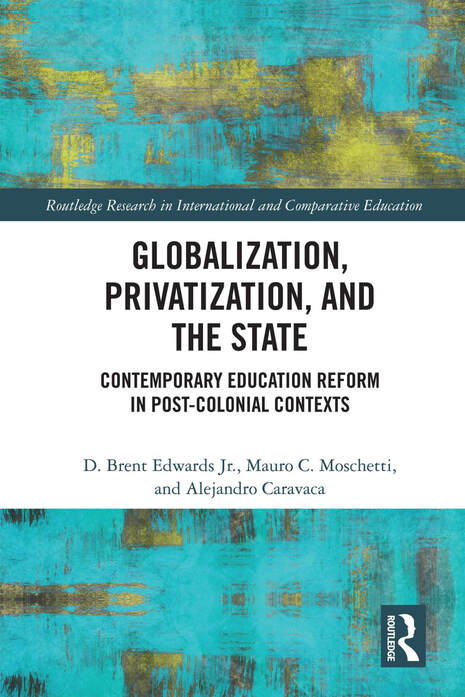
“This book bursts open the taken-for-granted concepts of the state that circulate in studies of globalisation and education. ... [T]he authors illuminate the urgent need for a sustained and robust understanding of the interlocking forces of colonialism and capitalism in the field of education.”
  • Arathi Sriprakash, Professor of Education, University of Bristol
 
“This book offers and applies a much-needed framework for the study of the links between education reform and globalization in post-colonial settings.. ... [T]he book's framework and insights are broadly relevant and are sure to serve as key referents for work at the intersection of education, the State, and privatization.”
  • Xavier Bonal, Professor, Autonomous University of Barcelona
 
“In today’s changing global governance architecture, this book is a must-read for anyone who wants to comprehend the state’s reemerging role and its efficacy in education.”
  • Tavis Jules, Associate Professor, Loyola University Chicago
 
“An extremely instructive and easy to read book."
  • Nelly P. Stromquist, Emerita Professor, University of Maryland
 
“This is an important and timely book.”
  • Leon Tikly, Professor & Global Chair in Education, University of Bristol
 
“[The authors] offer an innovative framework for engaging with the many complex social, political, and economic dimensions that shape the globalization of educational policy in various contexts characterized by enduring colonial legacies in their many formations.”
  • Sharon Stein, Assistant Professor, University of British Columbia
Publisher's Website

Picture
Reviewed in the Melbourne Asia Review by Andrew Rosser (University of Melbourne)
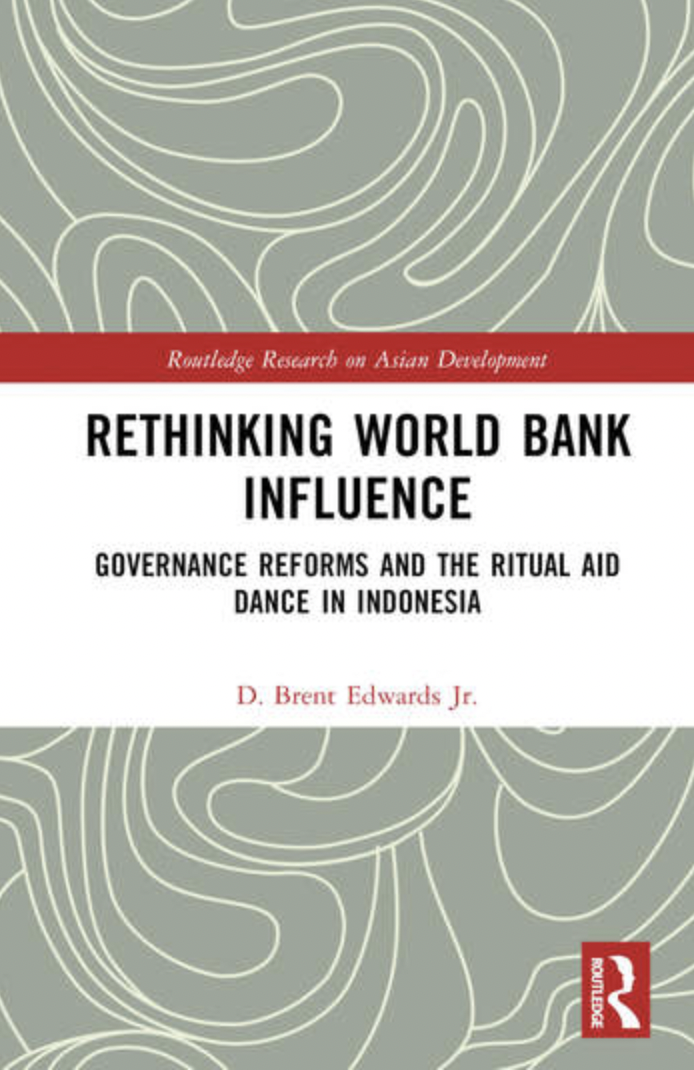
“[T]his volume shines in its original theorization of the educational governance relationship ... This volume reinvigorates by taking us beyond the superficial genuflection to ‘culture’ we find in so much contemporary educational research!”
  • Jeremy Rappleye, Kyoto University
 
“This compelling account ... is a groundbreaking book that should be read by anyone interested in the politics of governance reform.”
  • Andrew Wilkins, Professor, Goldsmiths, University of London
 
“Dr. Edwards’ meticulous analysis from the political, cultural, institutional and historical lenses on governance reforms in Indonesia help us understand how donor and borrower interact in the ways that benefit both but do not necessarily lead to the realization of officially pronounced outcomes.”
  • Taro Komatsu, Professor, Sophia University, Japan
 
“Crucial reading for development researchers. Follows the policy from inception to national Ministries to districts and villages, while interweaving theoretical frameworks, original research, and prior studies to critique the “ritual aid dance” and question the World Bank’s true influence.”
  • Kathryn Anderson-Levitt, Professor Emerita, University of Michigan-Dearborn
 
“If you’re interested in development banks and development governmentality in the social domain then read this book.”
  • Susan Engel, Associate Professor, University of Wollongong
 
"[V]ery compelling, and provides a comprehensive look at the relationship between ... funding agencies and developing countries. ... The book contributes significantly across many disciplines and offers a fresh perspective.”
  • Bambang Sumintono, Universitas Islam Internasional Indonesia.​
Publisher's Website

Picture
Review in Comparative Education Review by Iveta Silova (Arizona State University.
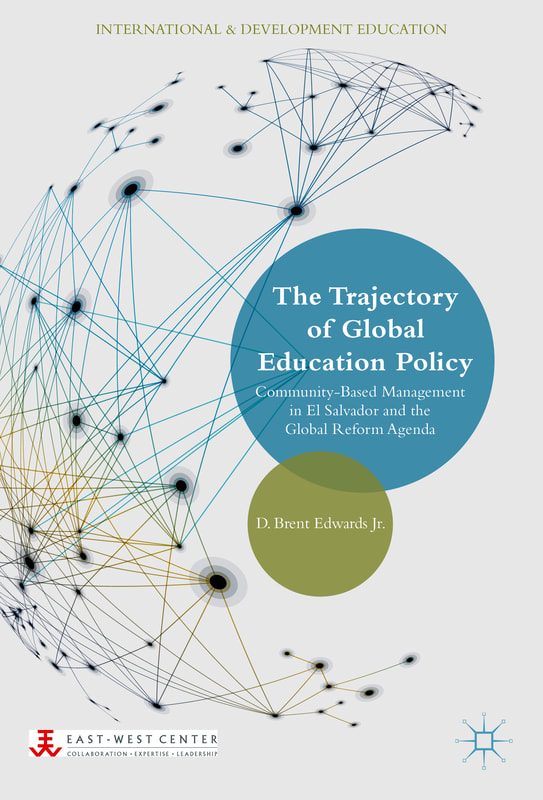
“How does an educational reform of a country gain global status and get catapulted from one corner of the world to another? This book critically examines how the program EDUCO (Education with Community Participation), established during the civil war period of El Salvador, was influenced by USAID and the World Bank and propagated as a “best practice” for teacher accountability and decentralization. D. Brent Edwards Jr.’s book is the first rigorous account of the evolution of a “best practice” or a global education policy that provides a thick description of the Latin American context and a sophisticated discussion of debates in globalization studies and political economy.”
  • Gita Steiner-Khamsi, Professor of Comparative and International Education, Columbia University (New York) and Graduate Institute of International and Development Studies & NORRAG (Geneva)
 
“This is a fine book and an important one. It is a careful, forensic and sometimes startling account of how one policy programme, EDUCO in El Salvador, became a global policy idea. It traces the origins and subsequent movement of the programme through and by multilateral agencies into other sites. This is exactly the sort of theoretically informed but empirically grounded analysis of global education policy formation that we need more of.”
  • Stephen J. Ball, Distinguished Service Professor of Sociology of Education, Institute of Education, University College London, UK
 
“The Trajectory of Global Education Policy is a beautifully crafted, in-depth analysis of a policy on education and community participation (EDUCO) set in El Salvador. D. Brent Edwards Jr. shows the gains to be had in understanding EDUCO when tracing its multi-scalar dynamics and global trajectory over time and space. This is case study work at its best.”
  • ​Susan L. Robertson, Professor of Education, University of Cambridge, UK
Publisher's Website

Picture
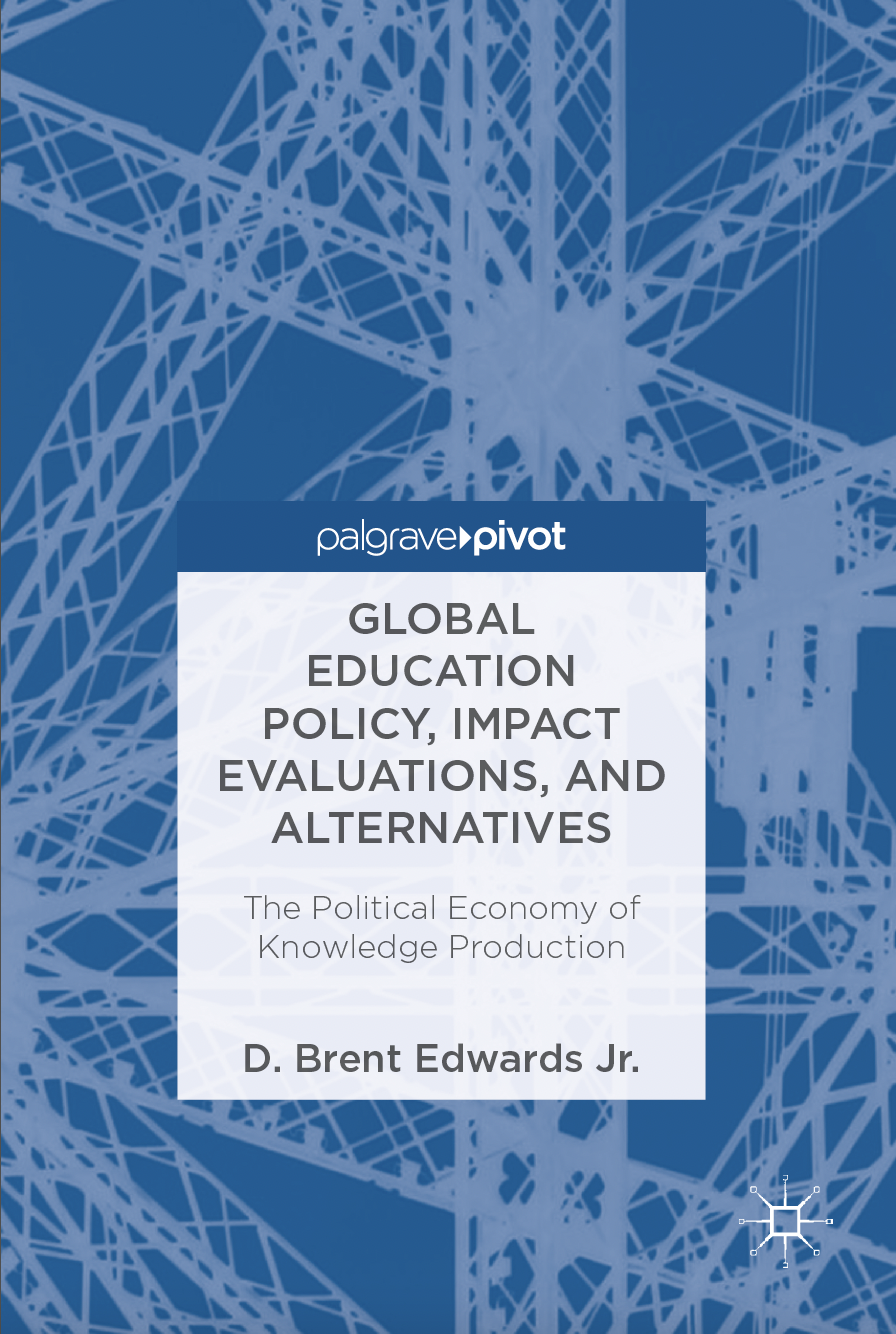
“Edwards provides an invaluable case study into how the World Bank produces ‘policy-based evidence’ – rather than ‘evidence-based policy’ – to reinforce its neoliberal bias. His detailed work on education policy in El Salvador exposes how the Word Bank’s purportedly scientific and neutral ‘impact evaluations’ are anything but.”
  • Robin Broad, Professor, American University and John Simon Guggenheim Fellow
 
“Through an impressive blend of theoretical and empirical analyses, Edwards carefully and critically scrutinises what has typically been taken as a ‘technical’ and ‘neutral’ mechanism in the field of educational aid—i.e., impact evaluation—and demonstrates the breadth and depth of its consequences as a tool of educational governance at the national and international levels. This major, original and important book represents a significant contribution to knowledge about the intersection of impact evaluation and educational aid.”
  • Roger Dale, Professor, University of Bristol
 
“Brent Edwards skillfully employs a multi-level, political economy approach to critically analyzing the agenda-setting role of the World Bank.  His study of EDUCO (Education with Community Participation) in El Salvador convincingly documents the importance of in-depth studies of the historical and sociocultural contexts in which reforms arise and are then extended to other countries.  By situating this global reform within a comprehensive financial-political-intellectual complex, he deftly critiques the seemingly rigorous and objective econometric studies that served as the basis for global policy promotion of EDUCO, while offering more appropriate research approaches that provide insight as to who benefits from what educational interventions.”
  • ​Robert F. Arnove, Chancellor’s Professor Emeritus of Educational Leadership & Policy Studies, Indiana University, Bloomington
Publisher's Website
Picture
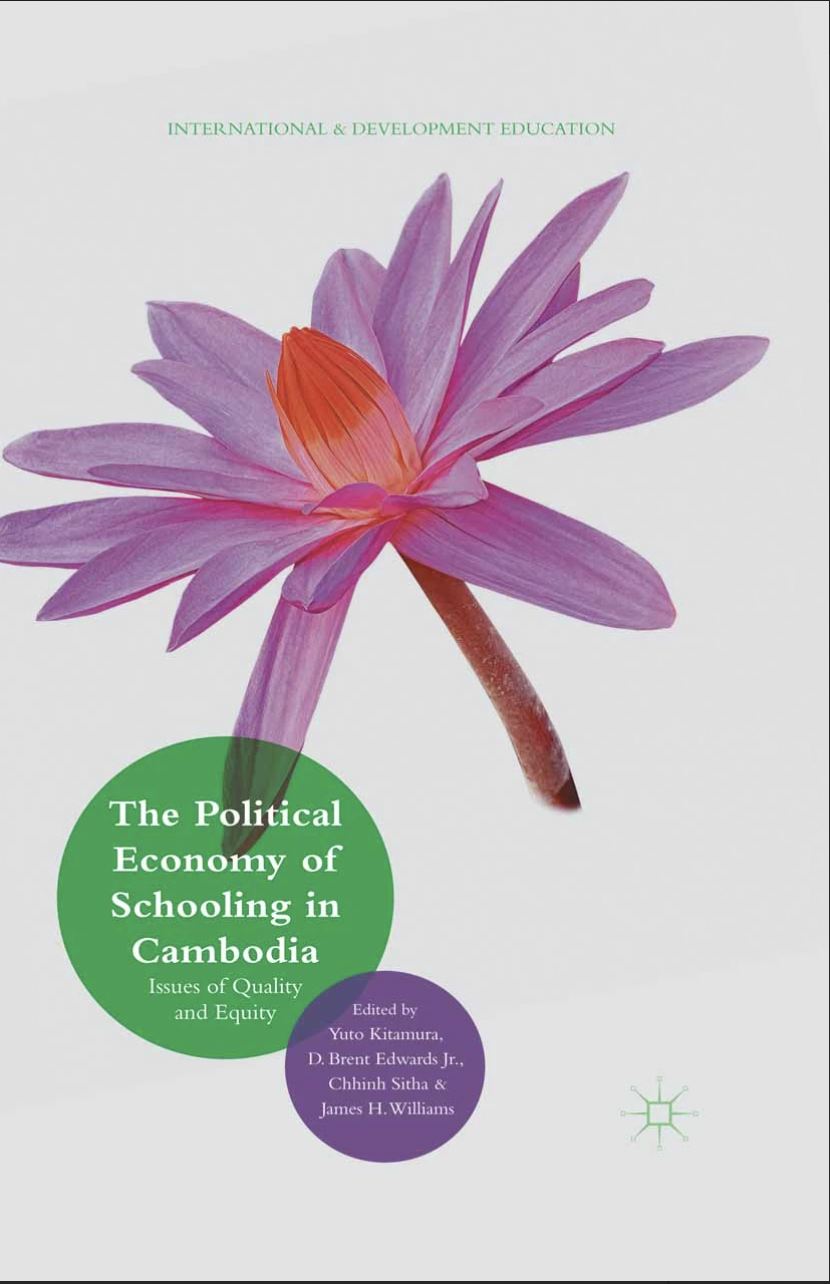
“The book is a valuable contribution to the fields of international and development education and of international and comparative education. … For those familiar with Cambodia, those new to Cambodia studies, those interested in area studies, and those wanting to learn about a specific educational national context, this volume is a good reference. … A thoroughly good read!”
  • Phan Le Ha, Journal of Social Issues in Southeast Asia, Vol. 32 (2), July, 2017

“This new volume on Cambodian education is an invaluable contribution to Cambodian Studies, Southeast Asian Studies, and comparative and international development education. … it is certainly an exceedingly valuable contribution, filling a huge gap in the literature and providing a comprehensive in-depth research based portrait of contemporary education in post-conflict Cambodia.”
  • Gerald W. Fry, Comparative Education Review, May, 2017

“The book fills an important niche in the comprehension of Cambodia’s unique educational situation. Researchers, students, policymakers, and others who wish to gain an expansive understanding of the situation of education today in Cambodia would benefit from reading it. … graduate students will find this book helpful in terms of various research methodologies from employing existing data on education to conducting qualitative interviews and quantitative data analyses.”
  • Kelly Grace and Sothy Eng, Journal of Current Southeast Asian Affairs, Vol. 35 (3), 2016
Publisher's Website